
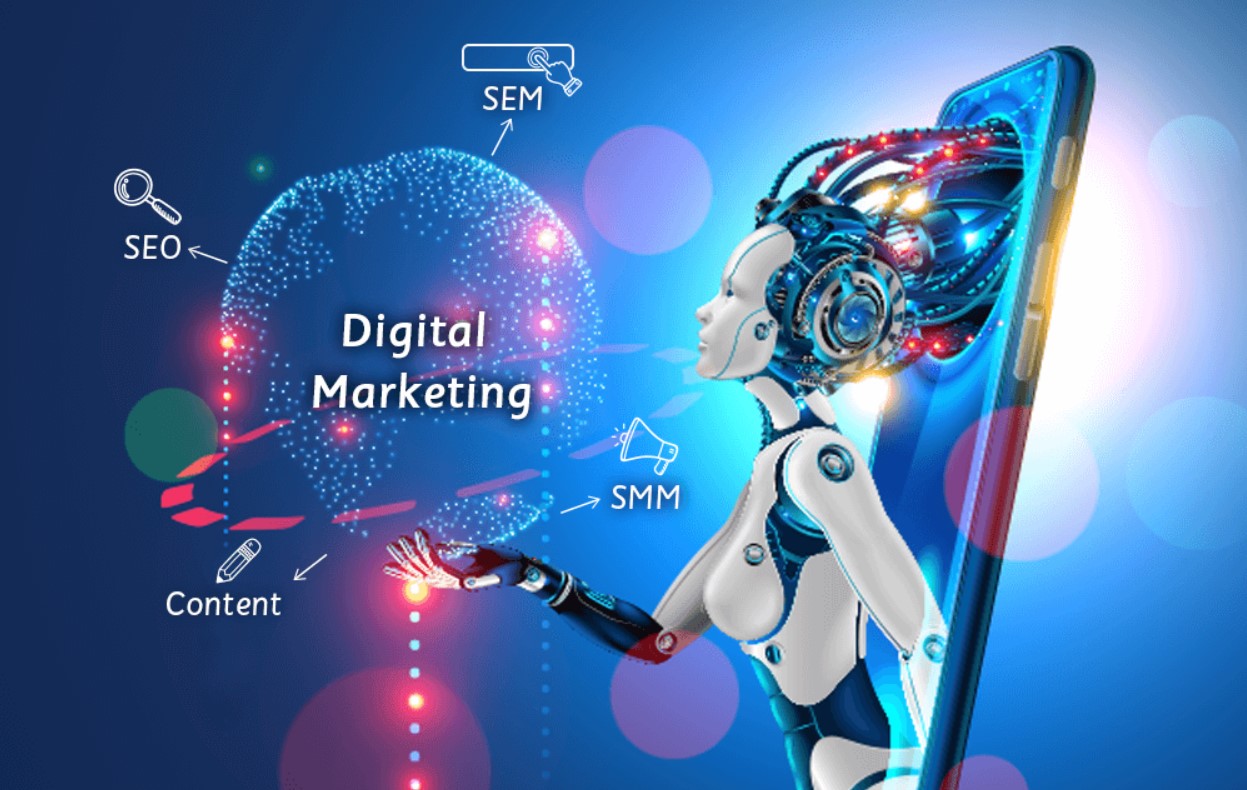

The landscape of digital marketing has been continuously evolving, and with the rapid advancement of Artificial Intelligence (AI), it is poised for another monumental transformation. From automating tasks to delivering personalized customer experiences, AI is reshaping how marketers engage with audiences, optimize campaigns, and measure performance. The potential applications of AI in digital marketing are vast, and its role is growing increasingly central in the quest for efficiency, effectiveness, and innovation. In this article, we will explore how AI is revolutionizing digital marketing and what the future holds for businesses and marketers in this space.
The Role of AI in Digital Marketing
Artificial Intelligence encompasses a wide range of technologies, including machine learning, natural language processing, and data analytics. These tools are allowing marketers to better understand their audience, predict trends, and create content that resonates with consumers in a more targeted and personalized way.
Here are the key ways AI is transforming digital marketing:
1. Personalization at Scale
Personalization has always been an essential aspect of marketing, but with AI, it has reached new heights. Today, AI allows businesses to tailor their marketing messages and campaigns to individual customer preferences, behaviors, and needs—at scale.
How AI enhances personalization:
Customer segmentation: AI can analyze vast amounts of data from multiple sources to identify unique customer segments, allowing businesses to create highly targeted campaigns for different audience groups.
Dynamic content: AI-driven tools can automatically adjust content (such as website copy, product recommendations, or advertisements) in real-time based on user behavior and interactions.
Predictive recommendations: Machine learning algorithms can predict products or services that a customer may be interested in, enhancing the relevance of recommendations. Companies like Amazon have been using AI-driven recommendation systems for years to personalize shopping experiences.
Email marketing: AI is revolutionizing email marketing by personalizing content, timing, and frequency. It can determine when a subscriber is most likely to open an email, increasing the chances of engagement.
2. Chatbots and Conversational AI
Chatbots powered by AI are becoming commonplace on websites and social media platforms. These AI-driven assistants can provide real-time, personalized customer support, handle queries, and even close sales— without human intervention.
Benefits of AI-powered chatbots:
24/7 customer service: AI chatbots can provide round-the-clock customer support, answering questions and solving issues instantly, improving customer satisfaction and retention.
Increased engagement: Chatbots can proactively reach out to users, guiding them through sales funnels, answering product-related questions, and offering tailored recommendations based on user preferences.
Seamless integration: Modern AI chatbots can be integrated with various messaging platforms such as Facebook Messenger, WhatsApp, and website live chat, offering a seamless user experience across channels.
3. Predictive Analytics and Data Insights
One of the most powerful applications of AI in digital marketing is its ability to analyze data and predict future trends. Predictive analytics uses historical data, machine learning algorithms, and statistical models to forecast outcomes, helping businesses make informed decisions and optimize their marketing strategies.
How predictive analytics benefits digital marketing:
Customer behavior prediction: AI can identify patterns in customer behavior and predict future actions, such as when a customer is likely to make a purchase or churn. This allows businesses to take proactive measures to retain customers and increase conversions.
Campaign optimization: By analyzing past campaign performance and user interactions, AI can suggest optimizations for ad targeting, budget allocation, and content strategy, making marketing efforts more cost-effective and impactful.
Demand forecasting: AI can predict future product demand based on current trends, helping businesses manage inventory and production schedules.
4. AI-Driven Content Creation and Curation
Content is a cornerstone of digital marketing, and AI is revolutionizing how content is created and distributed. AI-powered tools are making it easier for marketers to generate high-quality content at scale, optimize it for search engines, and ensure it resonates with the target audience.
Key AI-driven content innovations:
Automated Content Generation: AI tools, such as GPT-3 (the model powering ChatGPT), can generate written content, including blog posts, social media captions, and product descriptions. These tools analyze vast amounts of data to create content that is contextually relevant and SEO-friendly.
Content Curation: AI can scan the web for relevant content and automatically curate posts, articles, and resources that align with a brand’s objectives. This helps marketers stay ahead of trends and maintain an active online presence.
SEO Optimization: AI can assist in optimizing content for search engines by recommending keywords, analyzing search intent, and improving readability, all of which contribute to higher organic rankings.
5. Enhanced Advertising with AI
Artificial Intelligence is also significantly impacting how businesses approach online advertising. AI algorithms can now optimize ad targeting, bidding, and creative design, making digital advertising more efficient and cost-effective.
How AI is improving digital advertising:
Targeted ad campaigns: AI can analyze user data, including demographics, browsing behavior, and purchase history, to create highly targeted ads. This ensures that ads are shown to the most relevant audiences, increasing click-through rates (CTR) and conversion rates.
Dynamic ad creatives: AI can optimize the visual elements of ads, such as images, text, and calls-to-action, in real-time. By continuously testing and adjusting creative elements, businesses can improve the performance of their ads.
Programmatic advertising: AI allows for real-time bidding and automated ad placements, enabling advertisers to buy and place ads more efficiently, maximizing ROI and reducing waste.
6. AI for Social Media Marketing
AI is transforming how brands manage and optimize their social media marketing strategies. From automating posts to analyzing sentiment, AI is making social media marketing more streamlined and effective.
How AI Enhances Social Media Marketing:
Sentiment analysis: AI tools can analyze social media conversations to gauge public sentiment about a brand, product, or service. This allows businesses to adjust their messaging and engagement strategies accordingly.
Social listening: AI can track mentions of a brand across various social media platforms, providing valuable insights into customer preferences, pain points, and trends.
Automated Content Scheduling: AI-powered tools can schedule social media posts for maximum engagement based on user activity and engagement patterns, ensuring that content reaches the right audience at the optimal time.
7. AI and Marketing Automation
AI is playing a key role in marketing automation, helping businesses streamline repetitive tasks, such as lead nurturing, follow-up emails, and social media posting.
Benefits of AI-driven marketing automation:
Lead scoring and nurturing: AI can automatically score leads based on their behavior and interactions with a brand, allowing marketers to focus their efforts on the most promising prospects.
Automated email sequences: AI can help businesses create automated email sequences that nurture leads and guide them through the sales funnel, increasing conversion rates.
Efficient campaign management: AI tools can manage multi-channel campaigns, optimizing content, targeting, and timing across email, social media, and display advertising.
The Future of Digital Marketing with AI
As AI continues to evolve, its applications in digital marketing will become even more sophisticated. Here are some potential future developments in the field:
1. More Advanced AI Chatbots
Chatbots will become more advanced and capable of handling complex customer queries. Natural language processing (NLP) will improve, making interactions with chatbots feel more human-like and seamless.
2. Greater Integration of AI Across Platforms
We can expect further integration of AI technologies across various marketing platforms. AI tools will work in tandem across email, social media, website optimization, and paid advertising to create a unified, data-driven marketing ecosystem.
3. Enhanced Personalization with AI
AI will continue to refine its ability to deliver hyper-personalized experiences. From dynamic content on websites to tailored product recommendations, businesses will be able to offer unique experiences to each customer, increasing loyalty and satisfaction.
4. Ethical Considerations and AI Regulation
As AI becomes more integrated into digital marketing, there will be an increasing need for ethical guidelines and regulations. Marketers will need to balance personalization with data privacy concerns and ensure that AI is used responsibly.
Conclusion
The future of digital marketing with AI is incredibly promising. As AI continues to evolve, it will empower marketers to deliver more personalized, efficient, and impactful campaigns. From automating routine tasks to providing deep insights and optimizing content, AI is a tool that can help businesses stay competitive in an increasingly digital world.
While the opportunities are vast, marketers will need to adapt to the ever-changing landscape of AI. Those who embrace these technologies and use them strategically will be well-positioned to thrive in the future of digital marketing.